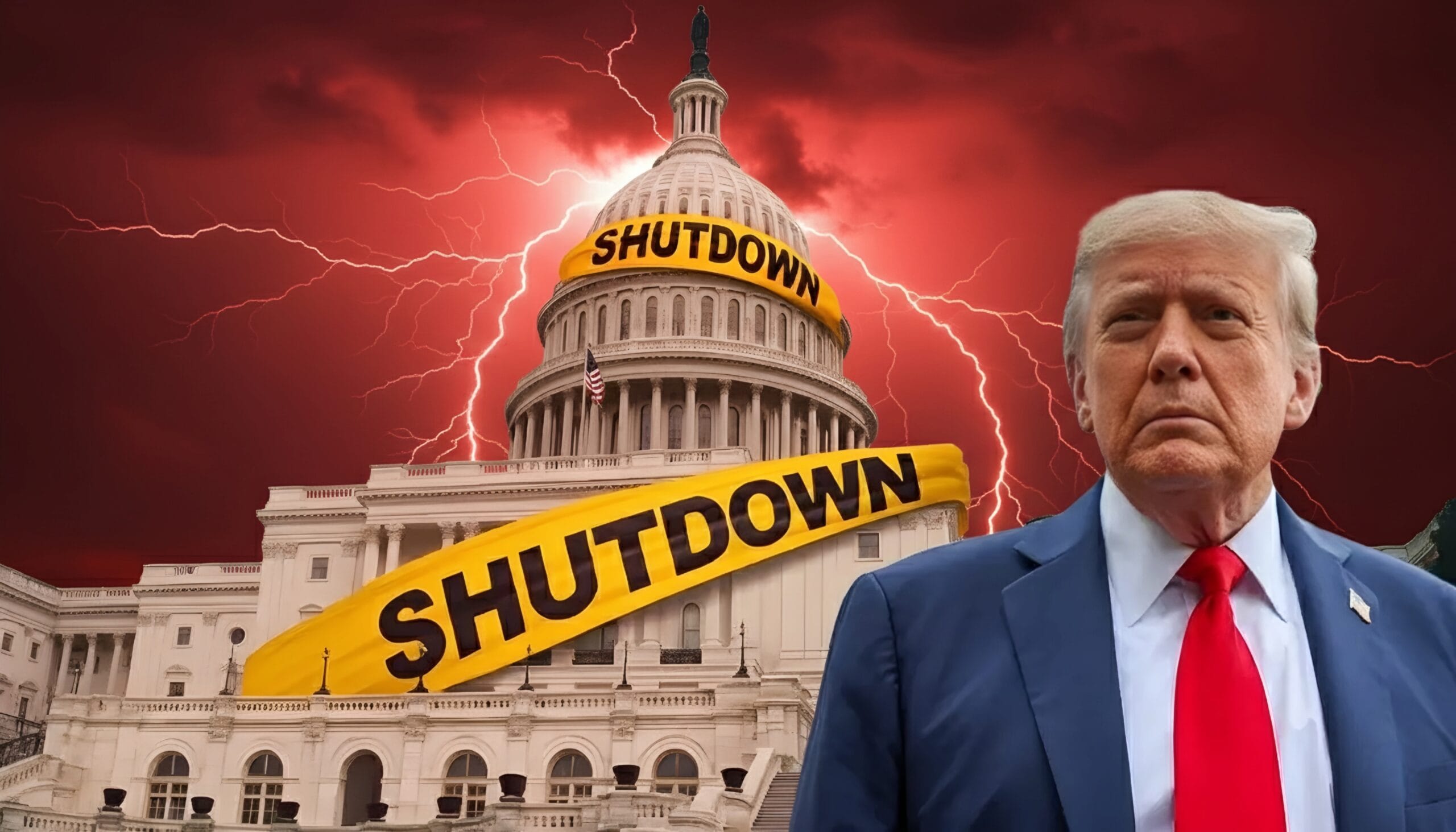
The US federal government has officially shut down for the first time since 2018, triggering widespread disruptions to services, salaries, and immigration processes that directly affect not only Americans but also the Indian diaspora and travelers. The shutdown, led by an unresolved battle between President Donald Trump, Republicans, and Senate Democrats over healthcare spending and a new budget, exposes key fault lines in American politics and governance
Short Summary:
- The US government shutdown began on October 1st 2025, due to a deadlock over healthcare funding.
- Hundreds of thousands of US federal workers face unpaid furloughs, with many services suspended or limited.
- Essential sectors (military, law enforcement, US immigration processing) still operate but without pay to many staff.
- Social Security, Medicare, and Postal Service continue; visa and passport work may face delays if shutdown drags on.
- Democrats and Republicans blame each other, with no clear end date for the standoff.
What Triggered the US Government Shutdown?
The shutdown began when funding bills failed to pass the Senate, with Democrats blocking a Republican stopgap spending package that did not address their demands for continued Affordable Care Act (ACA) subsidies. President Trump and Senate Republicans argued for a temporary funding deal, while Democrats insisted on expanding health-care supports for millions of Americans.
- Only 55 votes were cast in favor, short of the 60 required.
- The dispute centers around the expiration of ACA insurance subsidies, threatening higher premiums for 24 million people, especially in states with large Indian communities.
What Services Are Affected in the Shutdown?
Federal operations are now suspended or severely curtailed, affecting both public services and behind-the-scenes government activities:
Essential services such as law enforcement, military operations, and border security will continue but staff won’t be paid until after Congress settles the standoff.
Immigration, Travel, and Visa Processing—What Changes for Indians?
US Immigration
USCIS (US Citizenship and Immigration Services) remains open as it relies on user fees rather than Congressional funding. Visa, green card, and premium evaluation are still ongoing, but certain programs requiring congressional appropriations (like E-Verify) are suspended. H-1B workers and employers should note:
- Labor Department filings (LCAs, PERM, wage determinations) are halted, so applications needing these approvals are stuck until the government reopens.
- DOS (Department of State) continues to process visas and passports, but if local funds run low, only emergency or diplomatic cases will get attention.
- Travel to/from the US, especially for Indian travelers, should allow room for contingencies due to unpredictable delays at consulates and airports.
Airports and Aviation
Air traffic controllers and TSA workers continue at airports, working without pay. While immediate travel disruption is minimal, prolonged shutdowns could lead to staff shortages and operational delays.
Social Security, Medicare, and Welfare
Benefit payments, including Social Security and Medicare, continue without interruption, but verification and new card issuance may be paused.
How Many Workers Are Affected? Layoffs and Job Security
- The government furloughed up to 750,000 federal employees, with agencies like the EPA (89% of workers), Education (87%), and Commerce (81%) hit hardest.
- President Trump indicated that large-scale permanent firings could occur if the shutdown drags on, particularly targeting non-essential roles.
- Essential workers such as those in the military, defense, law enforcement, and critical infrastructure—often working without pay—will get back pay after the shutdown ends.
How Long Will the Shutdown Last?
No clear end is in sight. Historically, most shutdowns last a few days, but Trump’s previous shutdown in his first term extended for 35 days—the longest in US history. The House and Senate are not meeting until later in the week, making immediate resolution unlikely. Negotiations continue, but both parties are entrenched in their positions.
Political Fallout and Blame Game—Who’s Responsible?
VP J D Vance and the Trump administration place blame squarely on Democrats for refusing to negotiate on healthcare costs or reopen government operations. Democratic leaders claim Trump is using the shutdown as leverage, risking American and immigrant livelihoods for political bargaining. Both sides remain in deadlock with no sign of compromise.
Impact on the US Economy
The longer the shutdown lasts, the greater the projected drag:
- Each week of government closure could trim 0.1 to 0.2 percentage points from GDP.
- Immediate market drops were recorded on Wall Street, with major indices falling due to economic uncertainty.
- Disruptions in regulatory activities, scientific research, and administrative duties could further aggravate economic stress over time.
Frequently Asked Questions (FAQ’s)
1. Will Social Security and Medicare stop during the shutdown?
No, payments continue, though some services may be limited or delayed.
2. Are US embassies and consulates open for visa appointments?
Mostly yes, but service levels could reduce to emergencies or diplomatic cases if the shutdown lasts long.
3. Can new H-1B applications be filed?
No, because Labor Department activity (including LCAs/PERM) is paused.
4. Are airports and travel services operating normally?
Yes, most operations are unaffected so far, but prolonged shutdown can cause delays if unpaid staff stop showing up.
5. How are federal employees affected?
Non-essential staff are furloughed without pay, with potential for mass layoffs if the shutdown drags on.
6. Who is responsible for the shutdown?
Republicans and President Trump blame Democrats for budget stalling; Democrats say Trump uses vital services as bargaining chips.
7. How long will the shutdown last?
History suggests a few days to weeks, but deeply entrenched positions mean it could extend longer.
Conclusion: What Should Indians and Migrants Do Next?
The latest US government shutdown has far-reaching effects, not only for Americans but for global migrants and Indian citizens traveling, working, or studying in the US. Essential services like visa processing, social security, and communications continue, but those filing new visas or job-based immigration paperwork must expect delays. For now, contingency planning and patience are key.
As both parties remain locked in a political standoff, the focus should be on health, job security, and travel safety. Monitor official advisories, reschedule non-critical visits, and stay alert for updates. The shutdown’s outcome may shape American policies and global travel for months ahead—Indians should act accordingly.