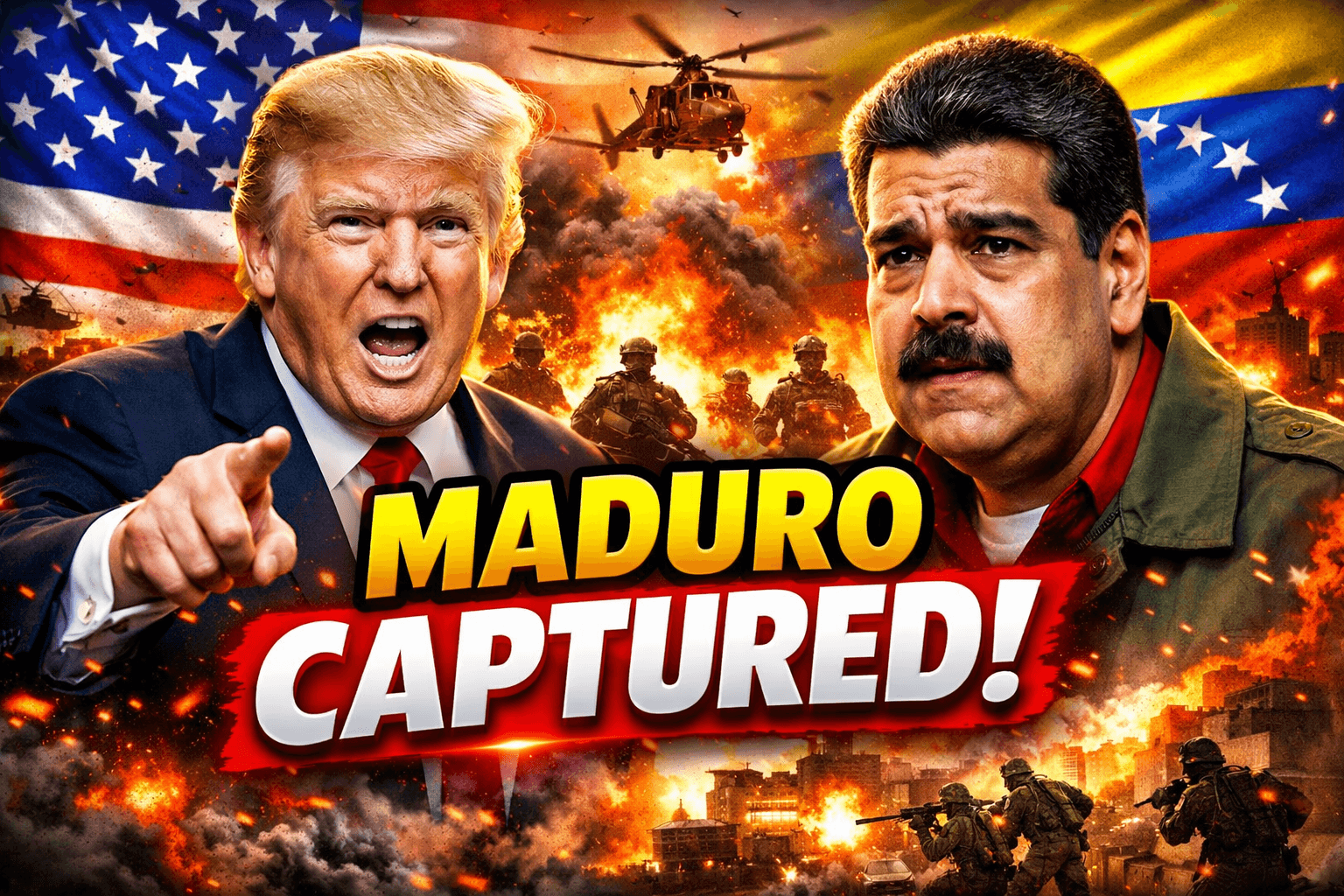
The US Captured Venezuela’s President Nicolás Maduro has drawn global attention after reports confirmed the capture of Venezuelan President Nicolás Maduro by United States forces. This article explains the background, long-standing tensions, and key factors that led to this event in a clear and easy-to-understand manner.
Disclaimer: This article is based on reports circulating on January 3, 2026. The situation is developing, and official confirmations may evolve. Readers are advised to follow updates from verified government and international news sources.
📌 What Happened on January 3, 2026?
According to multiple reports, the United States military, under the direction of Donald Trump, carried out a large-scale operation named “Operation Absolute Resolve”, leading to the capture of Venezuelan President Nicolás Maduro.
The operation reportedly took place in Caracas, Venezuela’s capital, during overnight airstrikes and a special forces raid.
Maduro and his wife, Cilia Flores, were allegedly flown to New York, where they are now in US custody, awaiting trial.
🔍 The Real Issue Between the US and Venezuela (Explained Simply)
Many people think this conflict is only about politics or ideology.
But according to the US government, the core issue is criminal activity, not politics.
🚨 The US View: “A Narco-Terrorism State”
The US has long accused Maduro’s government of operating like a criminal drug cartel, commonly referred to as the:
“Cartel of the Suns” (Cartel de los Soles)
The allegation is that Venezuela’s military, airports, ports, and state systems were used to traffic drugs into the United States.
⚖️ The 2020 Indictment That Changed Everything
In March 2020, during Trump’s first term, the United States Department of Justice formally indicted Nicolás Maduro.
The Charges Included:
- Narco-terrorism
- Large-scale cocaine trafficking
- Weapons-related offenses
The Key Accusation:
Maduro allegedly worked with FARC, a Colombian guerrilla group, to flood the US with cocaine, making it a national security threat.
🔥 Why Did Trump Act Now? (Major Triggers)
Tensions existed for years — but late 2025 and early 2026 changed everything.
1️⃣ Aggressive “War on Cartels”
President Trump escalated military action against drug networks.
Groups like Tren de Aragua and Venezuela’s leadership were reportedly labeled Foreign Terrorist Organizations (FTOs).
👉 This allowed military-style operations, not just sanctions.
2️⃣ Sanctions Failed to Remove Maduro
- Economic sanctions damaged Venezuela’s economy
- But Maduro stayed in power
- The US reportedly concluded that sanctions alone were not enough
3️⃣ Asset Seizures Were a Warning Sign
Between September 2024 and 2025, the US:
- Seized Venezuelan assets
- Confiscated Maduro’s presidential aircraft in the Dominican Republic
These moves weakened Maduro’s logistics and signaled direct action was coming.
4️⃣ Oil, Stability & Geopolitics
Venezuela holds one of the world’s largest oil reserves.
US officials reportedly believe:
- Maduro’s rule collapsed oil infrastructure
- A transition government backed by the US could stabilize the region
- American companies could help rebuild Venezuela’s energy sector
Trump even suggested the US would “run the country temporarily” during the transition.
🗓 Key Details:
- Date: January 3, 2026
- Location: Caracas, Venezuela
- Method: Overnight airstrikes + special forces raid
- Outcome: Maduro captured alive
🚔 Current Status:
- Maduro and Cilia Flores reportedly in US custody
- Awaiting trial in the Southern District of New York
- Charges relate to narco-terrorism and drug trafficking
🧠 The Issue in One Simple Line
The United States claims Venezuela became a state-sponsored drug trafficking hub, directly threatening American lives — and capturing Maduro was the final step of a 6-year legal and military campaign.
📊 Why This Matters Globally
- Could reshape Latin American geopolitics
- Impacts global oil markets
- Sets a precedent for treating drug trafficking as terrorism
- Raises questions about sovereignty, international law, and US military power
📢 Final Thoughts
Whether this operation will bring stability to Venezuela or create further unrest remains to be seen.
What’s clear is that January 3, 2026 may mark a turning point in US–Latin America relations.
👉 We will continue updating this story as more verified information becomes available.